ACCEPTING NEW CLIENTS: In-Person in Calgary & Online across Alberta Book a Free 20min Consult Call EXISTING CLIENT LOGIN

Teen Anxiety: How Parents Can Support Without Making It Worse
Learn how parents can support teen anxiety with calm, practical steps, avoid common mistakes, and know when therapy may help.
ANXIETY RELIEF
5/25/20266 min read


My post contentKey Takeaways:
Here's a quick overview of how parents can support a teen with anxiety in a way that feels steady, helpful, and not overwhelming:
Anxiety in teens may manifest itself through anger, avoidance, sleeping problems, physical ailments, or withdrawal.
The most useful thing that parents can do is to listen, remain calm, and maintain open communication.
Anxiety can be reinforced by avoidance and reassurance.
Helping teens with anxiety involves gentle routines, supportive steps, and recognition of small acts of courage.
Both teens and parents can benefit from therapy when anxiety begins to affect their daily lives.
Imagine the following: your teenager has hardly eaten breakfast, the bedroom door has been closed all morning, and the school run is becoming a daily confrontation. Any attempt to reach out is met with a one-syllable I am fine or total silence. That helplessness? It is among the most difficult things a parent can sit with.
This is what most families never get to know: anxiety among teens is so widespread, and most parents are actually doing their best with very little practical advice. However, anxiety tends to draw well-intentioned parents into habits that seem helpful at the time but quietly worsen the situation. This is what we deal with at Tri Lotus Psychotherapy with families.
What Is Teen Anxiety, and Why Is It So Common?
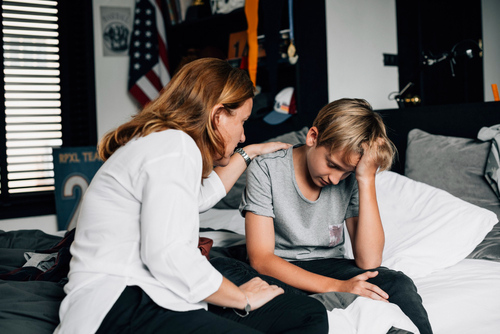
The adolescent brain is still developing, especially the parts involved in emotional control and rationality. This renders adolescence a time of actual neurological susceptibility, rather than melodramatic behaviour. Fear at these ages is not a personality defect or a parenting failure. It is, in most instances, a foreseeable reaction to an actually overwhelming world. According to a report, “11% to 25% of youth are diagnosed with an anxiety disorder” (University of Calgary).
School stress, social media comparisons, changing friendships, and the burden of figuring out who you are all add up quickly. And the anxiety symptoms in teens are not necessarily what you may imagine. Adults are anxious-looking. Adolescents tend to play it out.
Most common signs of anxiety in teens:
Missing school, social events, or activities that they used to enjoy.
Rudeness, emotional tantrums, or rage that appear to be entirely unreasonable given the circumstances.
Recurrent physical symptoms: stomachache, headache, or general tiredness.
Problems with falling asleep or staying asleep most nights.
Requesting reassurance many times, even concerning small and mundane things.
Difficulty focusing or even making simple decisions.
What appears to be defiance or laziness is, in many cases, anxiety in a new guise. Early detection of signs of anxiety in teens provides families with a real benefit in the speed and efficiency of their response.
How Can Parents Actually Help Their Teen Through Anxiety Without Overstepping?
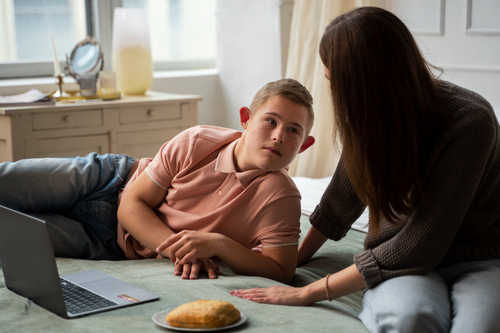

Support does not mean solving. The most stabilizing thing you can provide is a calm, steady, connected presence, not a rescue plan. Therapy for teen anxiety teaches us that the most important thing that teens need is a person who remains constant by their side, rather than one who removes all the challenges in their path. This is what that looks like in practice.
Listen Without Jumping to Solutions
Once your teen opens up, the first thing you want to do is to fix it. Resist that urge. Before teens can take in any advice, they must feel truly heard. Before making a suggestion, try to reflect their feelings first: "That sounds really exhausting." That is often just what they were seeking.
Stay Regulated, Even When It Is Hard
When your adolescent is losing control, your own nervous system wants to lose control, too. But parents and teens co-regulate emotionally, so that your calm really helps to calm theirs. It is not passive to take a breath before responding. It is among the most vigorous and energetic things you can do at that time.
Encourage Gradual Exposure, Not Avoidance, and Not Force
The nearest companion of anxiety is avoidance. Each party skipped, presentation avoided, or conversation evaded makes anxiety a bit more intense. However, overworking is equally detrimental. Assistance for teens with anxiety involves supporting small, manageable steps towards the things they fear, and actually appreciating every bit of courage, however small it may seem on the outside.
Talk in Low-Pressure Moments
Sit-downs are not very effective with teens. Rides, evening strolls, or even cooking together, sitting side by side and not looking at each other directly, have a way of opening up the conversation that a face-to-face environment would shut down. Use open questions and silence, and avoid phrases such as "You will be fine" or "Everybody gets nervous." Those are well-intentioned, but they are likely to close things rather than open them.
What Should Parents Avoid Doing When a Teen Has Anxiety?
Most of these habits come from a place of love, which is exactly what makes them worth examining. Well-meaning parental habits can inadvertently maintain or worsen a teen's anxiety rather than relieve it.
Encouraging avoidance: Letting your teen skip school, opt out of social situations, or sidestep difficult experiences teaches their brain that avoidance is the solution. This reinforces anxiety rather than building resilience.
Catastrophizing with them: When all anxious thoughts are treated as real emergencies, their nervous system will learn to respond that way.
Labelling it all: Explaining away all moods and all the hard times as due to their anxiety is a silent way of undermining your teen's own ability and strength.
Arguing with anxious thinking: Logic rarely lands when your teen's nervous system is dysregulated. Save reality-testing for when they're calm enough to actually hear you.
Minimizing their experience: Expressions such as “other kids can cope with this perfectly well” do not normalize anxiety; they risk making your teen feel like there is something wrong with them.
Putting your worry on them: Your teen can sense your worries about their anxiety, and that burden becomes something they carry silently.
Minor, regular adjustments to your response are more important than any single conversation will ever be.
How Do You Know When a Teen Needs Therapy for Anxiety?
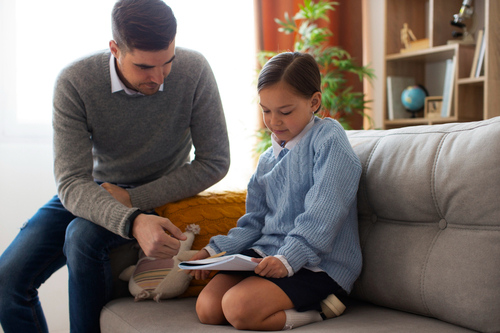

We recommend not waiting until you reach a breaking point. The sooner the better, and seeking professional assistance does not indicate that you have failed. It is one of the most proactive and loving decisions you can make.
Consider reaching out to an anxiety therapist for teens when:
Anxiety is interfering with school attendance, school performance, or daily routines.
You’re trying to address the anxiety, but avoidance is growing.
Social fear is causing friendships to shrink or disappear.
Physical symptoms are becoming common, including nausea, headaches, or chronic fatigue with no obvious medical explanation.
Your adolescent is giving up on things they used to be interested in, feels hopeless, and/or talks about self-injury.
Our therapists at Tri Lotus Psychotherapy rely on methods such as CBT, EMDR, ACT, and Emotion-Focused Therapy, choosing the approach that best suits the person, not necessarily the diagnosis. Parents may also be coached as part of the teen anxiety treatment at this level, and therefore, any progress made in the sessions translates to normal life at home.
Finding an appropriate anxiety therapist for teens does not mean stepping back as a parent. It is about combining the right expertise with your love. True anxiety relief for teens is entirely possible with the right support and promptly.
Conclusion
Helping teens with anxiety is among the more difficult phases of family life. When you have been giving everything you have, and you still feel that nothing is moving, that is not failure; it is anxiety, and it is worth much more than guesswork.
Stay connected. Stay calm. Stay curious. And if you’re struggling, contact us. At Tri Lotus Psychotherapy, we offer anxiety therapy for teens in Calgary and virtually throughout Alberta, since healing rarely happens in a vacuum, and your family is worth real support.
When you notice that your child is experiencing anxiety and you are not sure where to start, schedule a free 20-minute introductory call with our team today. Your adolescent has a right to feel good. And, frankly, so do you.
FAQs:
Can parents accidentally make teen anxiety worse?
Yes, over-protecting, eliminating all stressors, or silently worrying on behalf of a parent is a sure way to make a teenager believe that the world is too big to handle, and even minor deliberate changes in your reaction can actually alter that behaviour.
What should parents avoid doing when a teen has anxiety?
Do not over-reassure, which allows you to avoid feared situations completely, argue with anxious thoughts, or deny your teen's experience. Some of these behaviours may be helpful in the short term, but only increase anxiety in the long term. Denying your teen’s experience is rarely helpful.
How do you know if a teen needs therapy for anxiety?
When anxiety is persistently interfering with school, friendships, sleep, or daily functioning, and home support is not significantly improving the situation, it is time to reach out to a professional, as early intervention yields much better results.
How do parents talk to a teen about anxiety?
Select low-pressure situations, such as car rides or evening walks; be curious; and talk less than you listen. Remind your teen that struggling is not a weakness; it is human.
Let's Connect
Please fill out the form to request an initial appointment
or free consult call.
Contact
hello@trilotustherapy.com
Clinic Hours
Monday: 9:00am to 7:00pm
Tuesday: 8:00am to 8:00pm
Wednesday: 8:00am to 9:00pm
Thursday: 2:00pm to 9:00pm
Friday: 11:30am to 7:00pm
Saturday: 9:00am to 3:00pm
Sunday: 9:00am to 4:00pm
Copyright © 2025 by Tri Lotus Psychotherapy - All Rights Reserved


Land Acknowledgment: I gratefully acknowledge and honour that where I live, work and play is within the traditional territories of the people of the Treaty 7 region in Southern Alberta, which includes the Blackfoot Confederacy (comprising the Siksika, Piikani, and Kainai First Nations) as well as the Tsuut’ina First Nation, and the Stoney Nakoda (including the Chiniki, Bearspaw, and Wesley First Nations); and Métis Nation of Alberta, Region 3. The traditional Blackfoot name of this place is “Mohkinstsis”, which is also known now as Calgary.


*By submitting the form above, you acknowledge that you are the individual named above and would like to be contacted by Tri Lotus Psychotherapy Inc.
If you do not consent to us leaving you a voicemail, please state this in the "message" section of the form.